Friday, March 27, 2015

Water Quality


After running a Google search on “Ohio Department of Health” I selected the first link to www.odh.ohio.gov. Once on the site I chose “Data and Statistics” which lead be to an alphabetical prompt from A to Z of Data and Statistical Reports. Knowing that my search was headed in the direction of water quality and wells, I clicked on the “W” and sure enough the first link under “W” was “Wells and Private Water Systems.

Once re-directed to the page, the web document title came up “Private Water Systems." The first information provided to users is Ohio Department of Health’s relation to the Private Water Systems, which is that they formally regulate and administer local and private water systems.

Private Water systems include, wells, springs, ponds, cisterns and water tanks under the conditions that they provide potable water for human consumption. However to be classified as a “Private” water system, those systems must provide water to fewer than 25 individuals on a daily basis.  The “Potable” water coming from these sources doesn’t have to exclusively provide drinking water, but also water used for bathing, waste disposal or even uses such as laundry. Private Water systems can support a few family homes, small businesses or even barns.

The Ohio Department of Health inspects water quality for residents to be sure that it isn’t filled with contaminants. A common microorganism that is checked for in the water is E. Coli, which can cause disease in otherwise healthy people.

Escherichia coli, also known as E. coli is a bacterium that exists everywhere in the environment. Some bacteria can be found in our intestines to help us digest food. Because E. coli exists within the human body, it exists within our waste. Testing for E. coli in our water can show us if the water we use to drink, cook, and wash has been contaminated by water used for waste disposal.

Some strains of E. coli can be extremely dangerous for humans. Monitoring E. coli in Private Water Systems is therefore very beneficial to our health.


"E. coli Answers to Frequently asked Health Questions." Bureau of Environmental Health, Oct. 2004. Google. Web. 27 Mar. 2015. <https://www.odh.ohio.gov/~/media/ODH/ASSETS/Files/eh/HAS/ecoli.ashx>.

"Private Water Systems." Ohio Department of Health. Bureau of Environmental Health, 21 Oct. 2014. Google. Web. 27 Mar. 2015. <https://www.odh.ohio.gov/odhprograms/eh/water/PrivateWaterSystems/main.aspx>.

Thursday, March 19, 2015

Fukushima Today

After a nuclear power plant exploded in March of 2011, the Japanese government has worked hard to rebuild the land that was destroyed. Unprecedented, if the land becomes occupied again it will have been the most successful clean up and restoration of land after a nuclear explosion. There are 105 cities that need cleaning as a result of the 2011 incident.

Today, even four years later, workers head out in protective gear everyday to wipe down rain gutters and roofs. One major over haul that has to take place is the landscape. Leaves and soil need to be cleaned up. Large black trash bags are filled with contaminated soil and leaves to be disposed of elsewhere, while new fresh healthy soil and wood chips are laid in place.

Around 120,000 people still remain displaced from their homes, due to the dangerous health risks in the area and radioactive contamination. It is estimated that the removal of nuclear fuel debris will take until 2022. Both private sector and governmental agencies are working on the clean up, including The International Atomic Energy Agency and the Tokyo Electric Power Company. TEPCo is working to decommission all six reactors released at the site. So far TEPCo has treated approximately half of the water on the site, and a 770 meter wall to help protect the site from the ocean.

TEPCo's original plans expected to use approximately 150 billion dollars. Many of the local citizens however are upset with the recovery plan that TEPCo is managing. The locals think that the money to restore the land and the properties could be put to better use helping take care of the people who's health has been compromised as a result of the incident. Many citizens have an increased risk for diagnosis of cancer, tumors, or other genetic disorders, on top of being evacuated from their homes.

The number of reported deaths related to this disaster continue to rise, as the numbers pour in from various surrounding cities in the hundreds.


"After 4 Years, Fukushima Nuclear Cleanup Remains Daunting and Vast." Fukushima Update. Las Angeles Times, 17 Mar. 2015. Google. Web. 18 Mar. 2015. <http://fukushimaupdate.com/after-4-years-fukushima-nuclear-cleanup-remains-daunting-and-vast/>.

"What is Happening at the Fukushima Daiichi Site Now?." Fukushima Update. NEI, 11 Mar. 2015. Google. Web. 19 Mar. 2015. <http://fukushimaupdate.com/what-is-happening-at-the-fukushima-daiichi-site-now/>. 

"Deaths Tied to Fukushima Nuclear Disaster Up 18%." Fukushima Update. Press TV, 10 Mar. 2014. Google. Web. 19 Mar. 2015. <http://fukushimaupdate.com/deaths-tied-to-fukushima-nuclear-disaster-up-18/>.

Wednesday, March 11, 2015

Glyphosate in Food

Many herbicides come in contact with the food we put in our body every day. From the corn we put on the grill to the bacon we fry on Sunday mornings, evidence of the use of herbicide is left behind, and consequently put on our plates.

Over generations the popularity of genetically modified or engineered food has become more common and wide spread across Western tables. Herbicides help produce more food, resulting in more money for the farmers. The conversation that comes to the table is quality over quantity, what do we value more in these modern days where we have the liberty to choose. When herbicides were first introduced they seemed like a miracle drug, the perfect solution, but has since unraveled and transformed into the problem itself.

While the use of herbicides such as Roundup hit the market in the 1970's. Designed to kill weeds and other surrounding plants known to compete with commercial crops, was quickly transformed into a staple product for all farmers. Monsanto, the original company marketing Roundup worked to develop crops that were resistant to the killing agent, glyphosate, in the Roundup, therefore killing the weeds around the crops while leaving the crops growing healthy. The introduction of crops resistant to glyphosate entered the Western world into a modern era of concerns surrounding genetically modified and engineered foods. As soon as farmers began planting the glyphosate resistant crops they could apply the Roundup herbicide to their farms in much higher volumes.

The heavy application of Roundup, kills all competing plants, and allows the farmers to yield the maximum crop production from their fields. But the crops still come to our grocery stores, our farmers markets, our tables, and most importantly our mouths with glyphosate inside. It is even reported that over 80% of the U.S. food supply is contaminated with glyphosate.


"Roundup in Food: Are You Eating this Toxic Contaminant?." Mercola. Ed. Mercola. N.p., May 2014. Google. Web. 11 Mar. 2015. <http://articles.mercola.com/sites/articles/archive/2014/05/20/glyphosate-roundup-levels.aspx>. 

"Alert: Certified Organic Food Grown in U.S. Found Contaminated with Glyphosate Herbicide." Health Impact News. Ed. Brian Shilhavy. HIN, n.d. Google. Web. 11 Mar. 2015. <http://healthimpactnews.com/2014/alert-certified-organic-food-grown-in-u-s-found-contaminated-with-glyphosate-herbicide/>.

Wednesday, February 25, 2015

Ebola

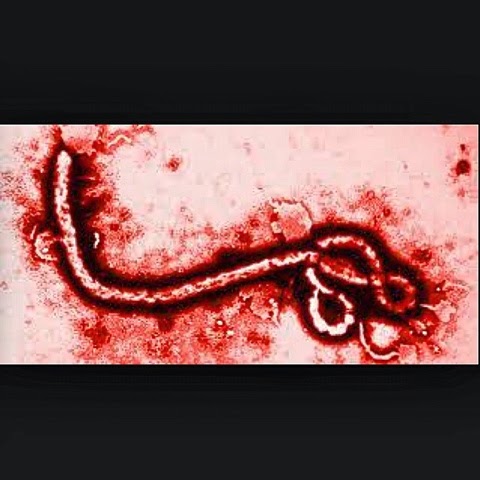
Ebola Virus Disease is a rare and potentially life threatening disease that is originally caused by an infection. The Ebola Virus can cause disease in humans as well as non-human primates including but not limited to Gorillas, Chimpanzees, Orangutans, and Bonobos. There are five strains of the Ebola virus, but only four have ever affected humans.

The Ebola viruses are most commonly found in Northwestern Africa. In 1976 near the Ebola River the virus was initially found, hence the name.  In order for an outbreak to start in the human population a "spillover" event must first occur, which involves a human making contact with an infected animal, either a primate or the natural host reservoir, which is unknown at the present time but highly suspected to be bats. Once one human is infected, they can then pass the virus to another human. Any broken skin or mucus membranes can be the site of transmission for the virus. The virus can be picked up from any cloth such as bedding, needles, or medical equipment like syringes.

Some common symptoms of Ebola include: fever, headache, muscle pain, weakness, fatigue, and unexplained bruising. These symptoms can present themselves anywhere from 2 to 21 days after being exposed to the virus, but appear most commonly after 8-10 days.

It is important that patients infected with the Ebola virus receive IV fluids, and are monitored for electrolyte levels as well as blood pressure. The quicker an infected patient receives treatment the better. Ebola Virus Disease has a 50% fatality rate, but changes and can be anywhere from 25% to 90% during times of extreme outbreaks. Community response is vital in limiting the outbreak.

Past Ebola outbreak locations include: the Democratic Republic of the Congo, South Sudan, Uganda, Ivory Coast, and more. 2014 saw the largest known outbreak of the Ebola Virus in west Africa crossing boarders to a handful of countries, and spreading as far as The United States.


"Ebola Virus Disease." Centers for Disease Control and Prevention. CDC, n.d. Google. Web. 25 Feb. 2015. <http://www.cdc.gov/vhf/ebola/>.

"Ebola Virus Disease." World Health Organization. WHO, n.d. Google. Web. 25 Feb. 2015. <http://www.who.int/mediacentre/factsheets/fs103/en/>.

Disaster Animal Response

Disaster Animal Response is any professional relief team or effort that works to provide rescue missions or protection for animals at risk of dangerous living conditions. Some of the work includes veterinary consultations, animal relocation, shelter development, and population management. Another large part of the effort is devoted to raising awareness for local animal welfare programs.

Often the animals rescued are either victims of illegal animal cruelty or of natural disasters, such as hurricanes or tornadoes. Less often but still, some animals are hoarded in small homes without up keep, are part of a dog fighting situation, or live in puppy mills. Fires and floods to homes also are instances where a Disaster Animal Response Team may be called. Animal rescue volunteers travel all around the world to look after all variety of animals involved in these dangerous environments.

Disaster Animal Response teams come from a range of backgrounds but all contribute to animal handling, cleaning facilities, and even administrative tasks.

Most Disaster Animal Response Teams are based out of certain county or district, as organized typically through the state government. The idea for DART came to the United States government in 1992 after Hurricane Andrew struck Florida. The Humane Society of the United States realized that there was no effort being carried out to do anything for the animals left behind. Developing trained teams of professionals to work side-by-side with emergency relief responders became the new mission of the Humane Society.

One of the largest obstacles for teams to complete their missions is the amount of equipment required to carry out a successful rescue. Each mission typically requires cages, blankets, towels, medicine, and either a tent or a trailer to set up at or near the location. With limited funding it is difficult to care for every animal in need.

Becoming a DART volunteer requires skills in animal instincts as well as search and rescue skills. DART volunteers make a world of difference in the lives of these animals everyday thanks to their dedication and hard work.


Boone County Disaster Animal Response Team. N.p., 2010. Google. Web. 25 Feb. 2015. <http://bc-dart.webs.com/>.

"Disaster and Cruelty." ASPCA Professional. ASPCA, n.d. Google. Web. 25 Feb. 2015. <http://www.aspcapro.org/resource/disaster-cruelty-disaster-response/disaster-response-training>. 

Friday, February 13, 2015

Environmental Justice

Environmental Justice is the fair treatment of and the enforcement of environmental laws. The goal of the US government's Environmental Protection Agency is to provide and support the mandates to maintain a healthy living environment, protecting both the human population as well as nature, to promote the highest quality environment to learn, work, and live in. The Environmental Protection Agency works to set standards and distribute permits to facilities, issues licensees and awards grants. The EPA is also concerned with Public Health issues. These public health issues come from the struggle to create a healthy environment for all people to benefit from including populations that traditionally live and work in or near dangerous sources of pollution including mines, landfills, and factories.

While reviewing Environmental Justice extensive emphasis is placed on the demographic that is affected by the various environmental health conditions involving polluted natural environments and dangerous work environments. America's most polluted neighborhoods are predominately neighborhoods of color or living in a state of poverty. Common polluters include landfills, dirty industrial plants, or trucking depots. There is even statistical research conducted by environmental health professionals that has resulted in the development of the term "environmental racism."

An example of this "environmental racism" as explored by the Natural Resource Defense Council is the growing mold and moisture problems exposing themselves in low-income housing in New York City's public housing. Wet and rotting walls pose many health risks for the New Yorkers inhabiting these homes, including allergies and asthma complications. The NRDC already has reported that the prevalence of asthma among children living in New York City public housing is nearly two times higher than kids living in the rest of the city. 

Environmental Justice professionals work to ensure that everyone has an equal opportunity to maintain clean drinking water and clean air and reviewing what makes a healthy environment and statistics to gauge the existing problems are all the areas that make up the study of Environmental Justice.


"Environmental Justice." Environmental Protection Agency. Environmental Protection Agency, n.d. Google. Web. 13 Feb. 2015. <http://www.epa.gov/environmentaljustice/>.

"Environmental Justice." Natural Resources Defense Council. Natural Resources Defense Council, n.d. Google. Web. 13 Feb. 2015. <http://www.nrdc.org/ej/>. 

Friday, February 6, 2015

Noise Induced Hearing Loss

Everyday we put ourselves at risk for a variety of preventable illnesses, noise induced hearing loss is one of the most common of those illnesses. The second leading cause of hearing loss, noise induced hearing loss, is virtually, completely preventable. This hearing loss can result from long time and continuous exposure to the volume on a TV, iPod, concerts, or activities such as playing in a band or the use of fire arms. Hearing loss can also result from short extreme exposure such as an explosion.

The ear is comprised of very sensitive structures called stereocilia that can be temporarily paralyzed by loud noises, but after continual exposure to those loud volumes eventually the stereocilia will die completely, causing hearing loss. A simple solution to this hearing loss is to monitor the volume on any device, and to wear protective ear gear when working or spending time in an environment that produces continually loud noises.

Work environments are one of the most common places to risk hearing loss, especially construction work sites, or mines. While this is generally a larger problem for adults in the working community, audiologists have seen a rise in children facing noise induced hearing loss. Researchers suspect the rise in personal electronic devices with the use of ear buds has caused this increase, emphasizing the importance of reminding youths to monitor their volume.

Perhaps one of the most frightening aspects of noise induced hearing loss is that it typically occurs slowly over time, and people don't always know how much hearing loss they are experiencing by exposing themselves to loud noises until it is too late. Noise induced hearing loss is permanent, once it is gone, it is gone. Signs that someone may be experiencing noise induced hearing loss could be hearing sounds as muffled or distorted, always asking others to speak up, or constantly feeling the need to increase the volume on the television.


"Noise-Induced Hearing Loss." National Institute on Deafness and Other Communication Disorders. US Department of Health and Human Services, n.d. Google. Web. 6 Feb. 2015. <http://www.nidcd.nih.gov/health/hearing/pages/noise.aspx>. 

Rabinowitz, Peter M. Noise-Induced Hearing Loss. N.p.: n.p., n.d. Google. Web. 6 Feb. 2015. <http://hannaziegler.tripod.com/ent/varia/rabinowi.pdf>.